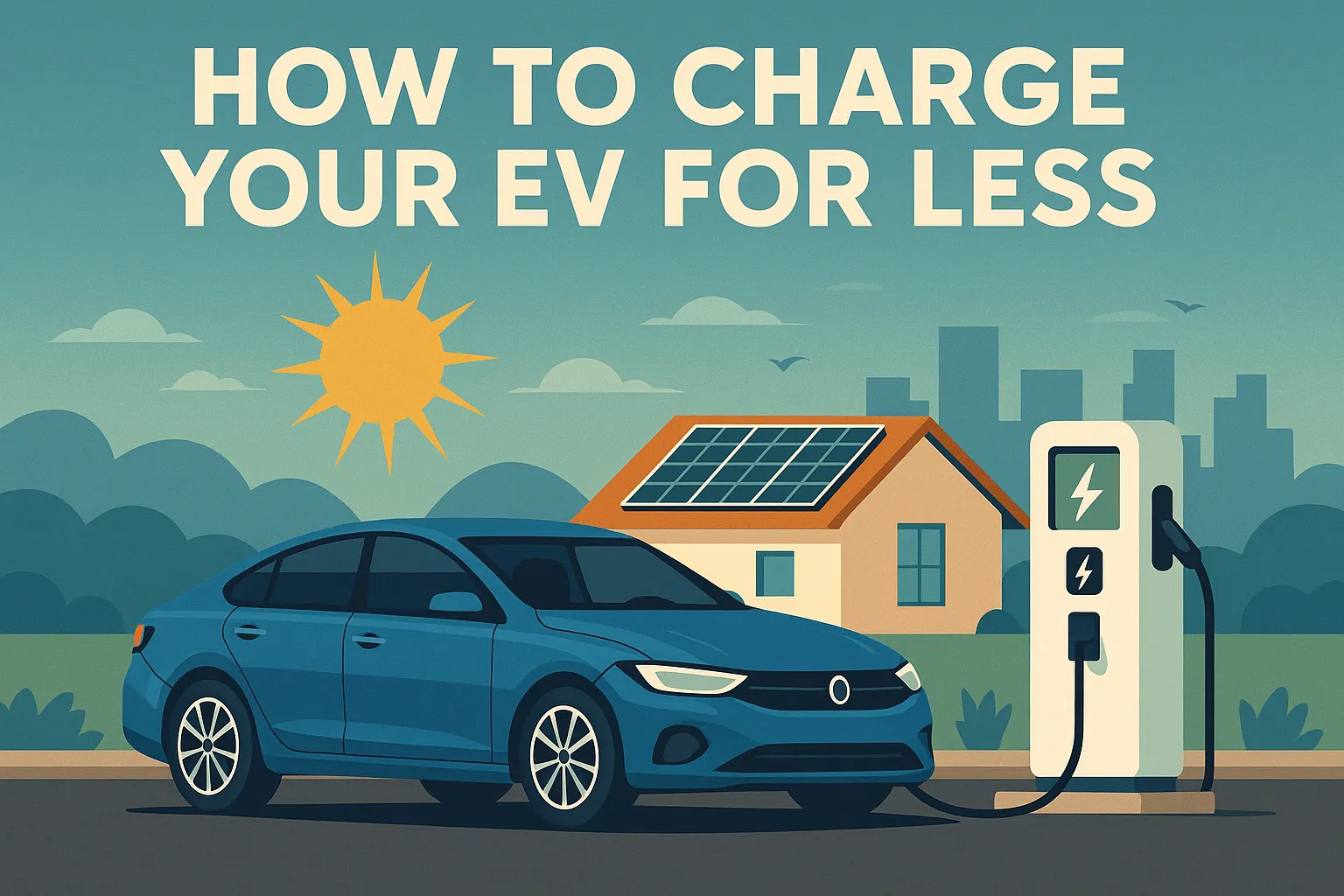
If you’ve bought an electric car to rein in the household budget, good news: pushing electrons is almost always cheaper than burning dinosaurs. The twist—and it catches plenty of new owners—is how wildly the price of a “fill” swings depending on where and when you plug in.
At one end, a smart charger sipping your daytime rooftop solar can cost as little as 10c per kWh—or effectively nothing if you’re soaking up surplus solar that would otherwise be exported for a measly feed-in tariff. At the other, an ultra-fast highway charger can set you back around 60c per kWh. On a typical 60kWh battery, that’s roughly six bucks from solar-optimised home charging versus about thirty-six at the fastest public gear, for 300–400km of range. Petrol for a similar trip? Significantly more, and that’s before we talk about real-world fuel use.
So yes, you can save heaps—if you charge smart. Here’s the lay of the land, minus the spin.
Charging, Plain English
Think of it like your phone, just with a much bigger battery. Charging speed is measured in kilowatts (kW), battery size in kilowatt-hours (kWh). Most EVs use about 18kWh per 100km on average, with batteries typically 40–120kWh.
The Three Levels (and where they make sense)
Level 1: Trickle (1.4–2.4kW)
A portable lead in a standard wall socket. Adds roughly 10–15km per hour. Brilliant for overnight top-ups or “I forgot to plug in” emergencies. Comes with the car; needs nothing fancy.
Level 2: Top-up (7–22kW AC)
Home wallboxes and “destination” chargers at hotels, car parks and shopping centres. Expect ~40–120km per hour. Ideal whenever the car’s parked for a while. A wallbox at home will usually run $1,000–$2,000 plus install. [Further details needed]
Level 3: Rapid (25–350kW DC)
Motorway rest stops and major routes. Adds ~150–300km per hour and costs more. Perfect for road trips and quick turnarounds.
Where the Real Savings Hide
Home is King (if you can)
If you’ve got off-street parking, home charging is almost always cheapest.
- Solar first. With feed-in tariffs sliding over the years, using your own generation beats exporting. Set your charger to favour midday sun.
- Off-peak plans. Can be ~20c per kWh if you schedule overnight charging. Look for EV-friendly time-of-use tariffs.
- Smart chargers let you automate all of this so you’re not playing “human timer” with the plug.
Not Everyone Gets a Cheap Plug
Apartment dwellers and some regional drivers often rely on public chargers, or face strata hurdles to install a socket near their park. That’s where community charging, simpler pricing, and smart-grid incentives need to do some heavy lifting. In NSW, grants are on the table to help buildings get EV-ready: NSW Electric Vehicle Ready Buildings Grant.
Public Charging: Fast, Handy… and Fee-Happy
You’ll run into a mix of Level 2 destination chargers and Level 3 rapid sites run by the big networks—Chargefox, Evie, BP Pulse and Tesla among them. Pricing varies:
- By kWh or by the minute. Watch which you’re paying for.
- Idle/congestion fees if you loiter after you’re full—especially at busy highway sites.
- Fast costs more. Great for road trips, not great for your wallet every day.
Apps like PlugShare and NextCharge help you find what’s open, what it costs and whether it’s working. [Further details needed]
Pro tip: Most cars slow charging as the battery nears full. Aim for 20–80% for the best bang-for-buck on time and money.
What Does 100km Actually Cost?
Using the average 18kWh/100km, here’s a rough feel for Aussie dollars:
- Excess rooftop solar: ~$0 per 100km (soak up what you’d export anyway)
- Solar via smart charger: ~$0.90–$1.80 per 100km (assuming 5–10c/kWh)
- Home off-peak grid: ~$2.70–$3.60 per 100km (15–20c/kWh)
- Standard grid rate (daytime): ~$5.40 per 100km (~30c/kWh)
- Ultra-fast public DC: ~$10.80 per 100km (~60c/kWh)
These are estimates; your car’s efficiency, local tariffs and driving style will shift the numbers a touch.
Make Cheap Charging Your Default
A little planning beats a lot of paying:
- Schedule it. Use off-peak timers or your charger app; target solar hours if you have PV.
- Go smart. A decent wallbox can follow your solar and throttle charge speed to match household loads.
- Plan the big trips. Map your stops to avoid the priciest or busiest sites—and those idle fees.
Bottom Line
EVs are cheaper to run than petrol, full stop. The trick is to lean on home solar and off-peak power as your staples, and treat rapid public charging as the road-trip safety net rather than the weekly habit.
If we want the savings (and the cleaner air) to be for everyone, we’ve got work to do: more access in apartments, clearer pricing, and smarter incentives. Until then, charge like a pro—set it, forget it, and let the sun do the heavy lifting.
Some of the information used in this article was sourced from: The Conversation - What’s the cheapest way to charge your EV?