In regional Australia, big infrastructure projects usually arrive from somewhere else. A corporation builds them, governments regulate them, and locals live with the outcome. What happened in Goulburn turned that pattern on its head.
The opening of the Goulburn Community Solar Farm in March 2026 marked far more than the switch-on of a renewable energy project. It signalled a shift in who owns the future of energy — and who benefits from it. What began as a conversation among concerned residents more than a decade earlier has become one of the country’s most advanced examples of community-owned solar and battery storage working together on a meaningful scale.
A long road powered by persistence
This project did not spring up overnight. The idea first surfaced in 2014 after locals attended a community energy gathering and realised they could take practical steps toward cleaner, more reliable power. Instead of waiting for someone else to act, they formed a local group and began asking the hard questions: Would it work? Could it pay for itself? Would the community support it?
Early feasibility work confirmed the concept had merit, but approval and construction were only part of the journey. The group had to navigate shifting government policies, detailed environmental rules and the disruptions of a global pandemic. Each stage demanded patience, negotiation and a willingness to keep going when progress slowed.
By 2020, the effort had matured into a formal cooperative structure, allowing locals to invest directly in the project and share responsibility for decision-making. This shift from informal group to structured organisation unlocked government funding and gave the initiative the financial backbone needed to move from paper plans to physical infrastructure.
A smarter kind of solar
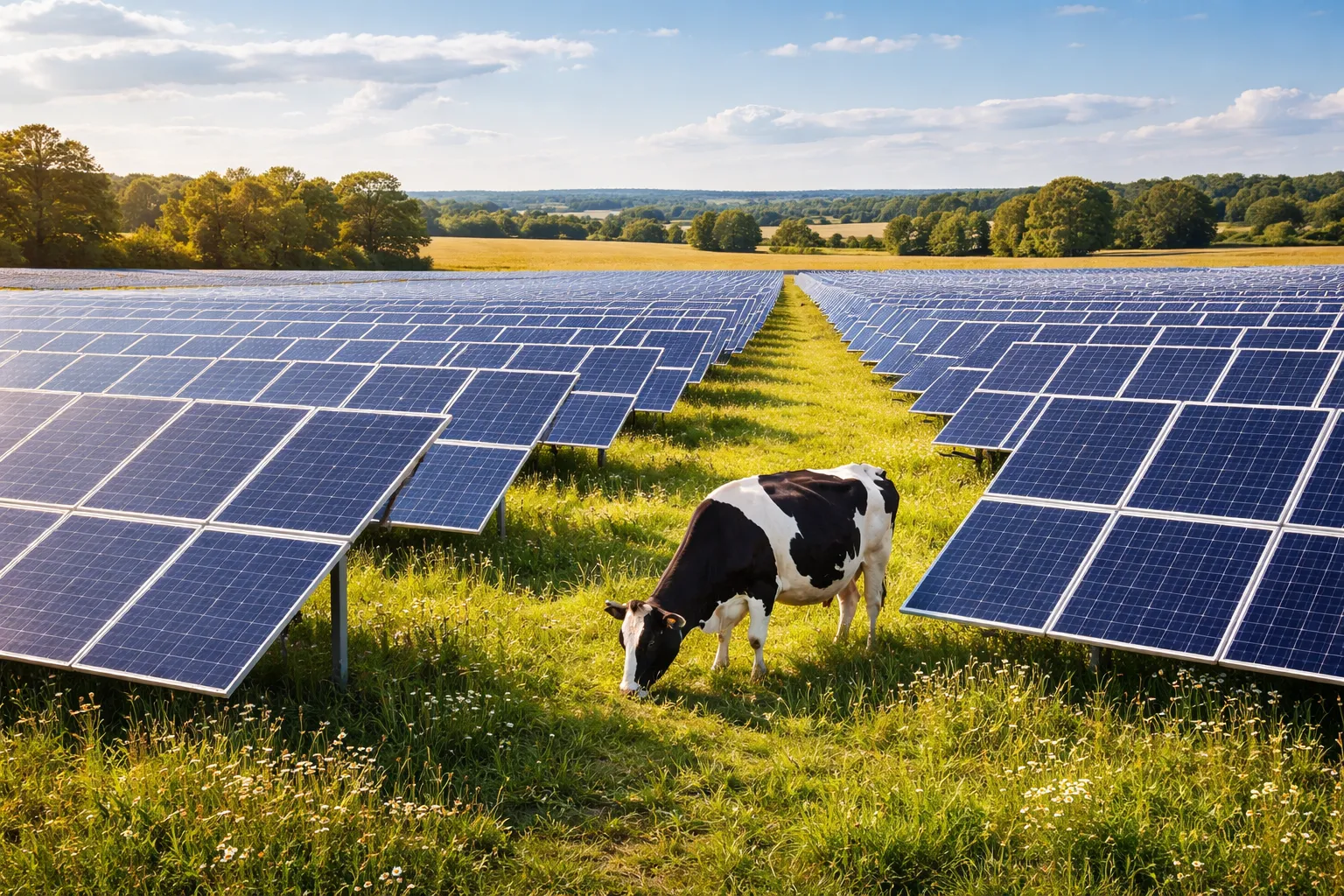
On the surface, the Goulburn facility looks like many other solar farms. Rows of panels capture sunlight and convert it into electricity. But the real difference lies in how the system is designed to behave once the sun goes down.
The site produces about 1.4 megawatts of solar power and is paired with a large battery capable of storing more than four megawatt-hours of energy. That combination allows electricity generated during the middle of the day — when supply is plentiful and prices are low — to be saved and released later when demand rises.
Not only will the solar farm pump renewable energy into the grid, but installing a battery will allow the project to sell into the grid at the most financially advantageous time of the day (usually the late afternoon/evening), and this will ensure that the revenue and ROI is maintained at the projected levels.
- Manufacturer: Trina Solar
- Storage capacity of battery: 4.07 MWh
Source: goulburnsolarfarm.com.au/technicals
This approach tackles one of the modern grid’s biggest challenges. Solar generation tends to peak at lunchtime, yet household demand often climbs in the late afternoon and evening. By holding energy in reserve and releasing it at the right moment, the battery helps stabilise supply and improves the financial return for the community.
It also provides a service once delivered almost exclusively by coal-fired power stations: keeping voltage and frequency steady across the network. In simple terms, the system does more than produce energy. It helps keep the lights on reliably.
Turning a problem site into a productive asset
Another defining feature of the project is where it sits.
Rather than taking up farmland or housing land, the cooperative deliberately chose a degraded industrial site that had little practical use. The area had previously been used for gravel processing and fuel storage, leaving it unsuitable for agriculture or development.
Transforming that land into a renewable energy facility delivered a double benefit. It avoided the loss of productive farmland and demonstrated how damaged sites can be rehabilitated into valuable community assets.
Because the location lies within a sensitive water catchment, the project team had to implement strict erosion control and landscaping measures. More than a thousand native plants were added to stabilise the soil and improve the local environment, showing that renewable infrastructure can coexist with environmental protection when planned carefully.
Ownership that puts people first
Perhaps the most distinctive aspect of the Goulburn model is how it is owned.
Instead of shares being concentrated in the hands of a few large investors, the cooperative operates on a simple principle: one member, one vote. That rule ensures decision-making power remains evenly distributed, regardless of how much money someone has invested.
The project cost several million dollars to build, with funding split between community investors and government support. Hundreds of locals contributed relatively modest amounts, making participation accessible to ordinary households rather than just institutions.
Returns are expected to be steady rather than spectacular, but the design focuses on long-term stability and local benefit. A significant portion of profits is intended to remain within the region, supporting jobs, services and future development.
Managing risk and building trust
Community projects live or die on public confidence, and renewable energy infrastructure is no exception.
Some residents raised concerns about battery safety, fire risk and potential environmental contamination. Those worries were addressed through detailed engineering standards, continuous monitoring systems and emergency response planning.
Modern battery installations are equipped with sensors that detect temperature changes early, allowing operators to intervene before problems escalate. Panels themselves are built from stable materials such as glass, aluminium and silicon, which do not behave like industrial chemicals if damaged.
Clear communication about these safeguards proved just as important as the technology itself. Trust grows when people understand how a system works and what protections are in place.
Energy that supports the community
The cooperative structure also allows the project to deliver social benefits alongside electricity.
A dedicated community fund has been established to help households struggling with energy costs — an issue that has become increasingly visible as prices rise. Investors can choose to contribute a portion of their returns to the fund, and local organisations manage the distribution of support.
This approach recognises a gap in the energy transition. Homeowners with the means to install rooftop solar can reduce their bills, but renters and low-income households often miss out. Community-owned generation offers a pathway for broader participation.
Small project, big message
It is easy to confuse this facility with much larger solar developments elsewhere in the state. Those projects play an essential role in replacing fossil fuel generation and supplying electricity at scale.
The Goulburn initiative serves a different purpose.
Rather than focusing solely on output, it demonstrates how communities can shape their own energy systems. It shows that local ownership can coexist with advanced technology, environmental responsibility and financial sustainability.
The project also highlights a broader lesson about resilience. Over more than a decade, the team behind the solar farm faced policy changes, regulatory complexity and economic uncertainty. Their success suggests that determined communities can outlast shifting political winds.
What comes next
Australia’s electricity system is changing rapidly, with renewable generation expanding across the country. Technologies such as smart inverters and networked batteries are making it possible for smaller installations to work together as coordinated energy resources.
The Goulburn facility is already positioned to participate in that future, adjusting its output in response to real-time conditions on the grid. Instead of operating in isolation, it can become part of a larger network that supports reliability during periods of high demand.
For regional towns, this model offers something powerful: control.
It means energy infrastructure can be designed around local needs, owned by local people and built in ways that strengthen the community rather than simply serving distant markets.
The legacy of a kitchen table idea
When the first discussions took place more than a decade ago, few would have predicted the scale of what would follow. The project has since turned an underused industrial site into a reliable source of clean electricity and a symbol of collective effort.
More importantly, it has shown that the transition to renewable energy is not only about technology. It is about trust, participation and shared benefit.
In Goulburn, the shift to cleaner power did not arrive from outside. It grew from within — one conversation at a time — and now stands as proof that communities can build their own path forward.