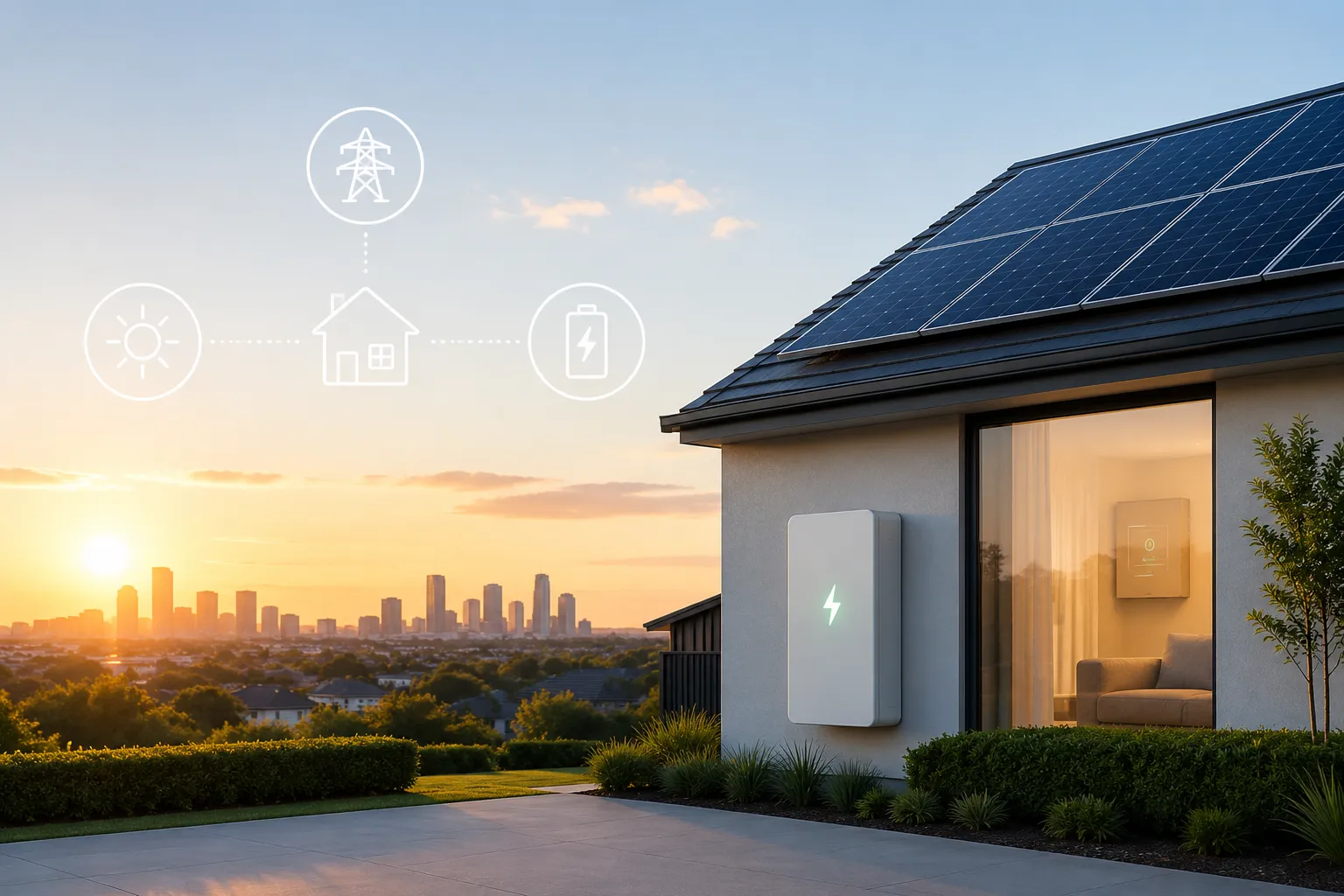
Australia’s electricity network is entering a period of significant change, with the latest long-term planning showing that the transition to cleaner energy will rely far more on local generation and storage than previously expected. Rather than expanding the grid with thousands of kilometres of additional transmission infrastructure, increasing numbers of household and utility-scale batteries are reshaping how electricity is produced, stored and shared.
The Australian Energy Market Operator’s 2026 Integrated System Plan outlines what it considers the most cost-effective pathway for the National Electricity Market over coming decades. One of the most notable changes is a reduction in the projected need for new high-voltage transmission lines. By 2050, around 6,000 kilometres of additional transmission is expected to be required, approximately 1,500 kilometres less than earlier forecasts.
Several factors are driving this revised outlook. Some major transmission projects have already progressed from planning into construction, meaning they are no longer counted in future projections. At the same time, the ongoing decline in the cost of solar panels and battery storage has made it increasingly practical for electricity to be generated and stored much closer to where it is used.
This combination of centralised and decentralised infrastructure is expected to deliver significant savings. While transmission upgrades remain an important part of the national plan, AEMO estimates that investment in these projects can reduce overall electricity system costs by avoiding much larger expenditure on generation, operations and fuel.
Battery storage has become one of the defining features of Australia’s energy transition. Across the country, ageing fossil fuel infrastructure is increasingly being replaced by large-scale batteries that make use of existing grid connections, reducing both construction costs and development time. The transformation is also happening at household level, where rooftop solar and residential batteries continue to expand rapidly.
Around 36 per cent of detached and semi-detached homes now have rooftop solar, while roughly 600,000 households have installed battery systems, supported in part by government incentives. At utility scale, the storage development pipeline has grown dramatically, increasing from 17 gigawatts to 45 gigawatts within only a few years. Looking ahead, AEMO expects household battery capacity to more than double by 2030 before reaching around 35 gigawatts by mid-century, with batteries eventually installed in about two-thirds of homes that have rooftop solar.
The increasing number of distributed energy resources also changes the way the electricity system responds to disruptions. Traditional power networks have relied heavily on large generators and major transmission corridors, creating points where a single failure can affect large numbers of customers. A more decentralised network spreads generation and storage across many locations, allowing sophisticated grid management systems to draw on thousands of batteries to maintain stability if individual assets fail.
While the outlook for solar and battery storage is strong, the transition is not without challenges. Wind energy development has not kept pace, with approval and construction delays slowing progress. Wind generation remains essential because it complements solar production by supplying electricity during evenings and periods of lower solar output, particularly through winter.
The urgency is heightened by the planned retirement of Australia’s coal-fired power stations. AEMO forecasts that around two-thirds of the existing coal fleet will close by 2035, with all remaining coal generation expected to retire by 2050. Replacing that capacity will require faster deployment of wind farms, utility-scale solar projects and firming technologies, including flexible gas peaking plants alongside battery storage.
For households, the latest projections suggest that the future electricity system will rely increasingly on energy generated and stored at home. Large infrastructure projects will continue to play an important role, but growing numbers of rooftop solar systems and batteries are reducing the need for extensive network expansion. The result is an electricity grid designed to be cleaner, more flexible and better able to withstand outages while keeping long-term costs under control.