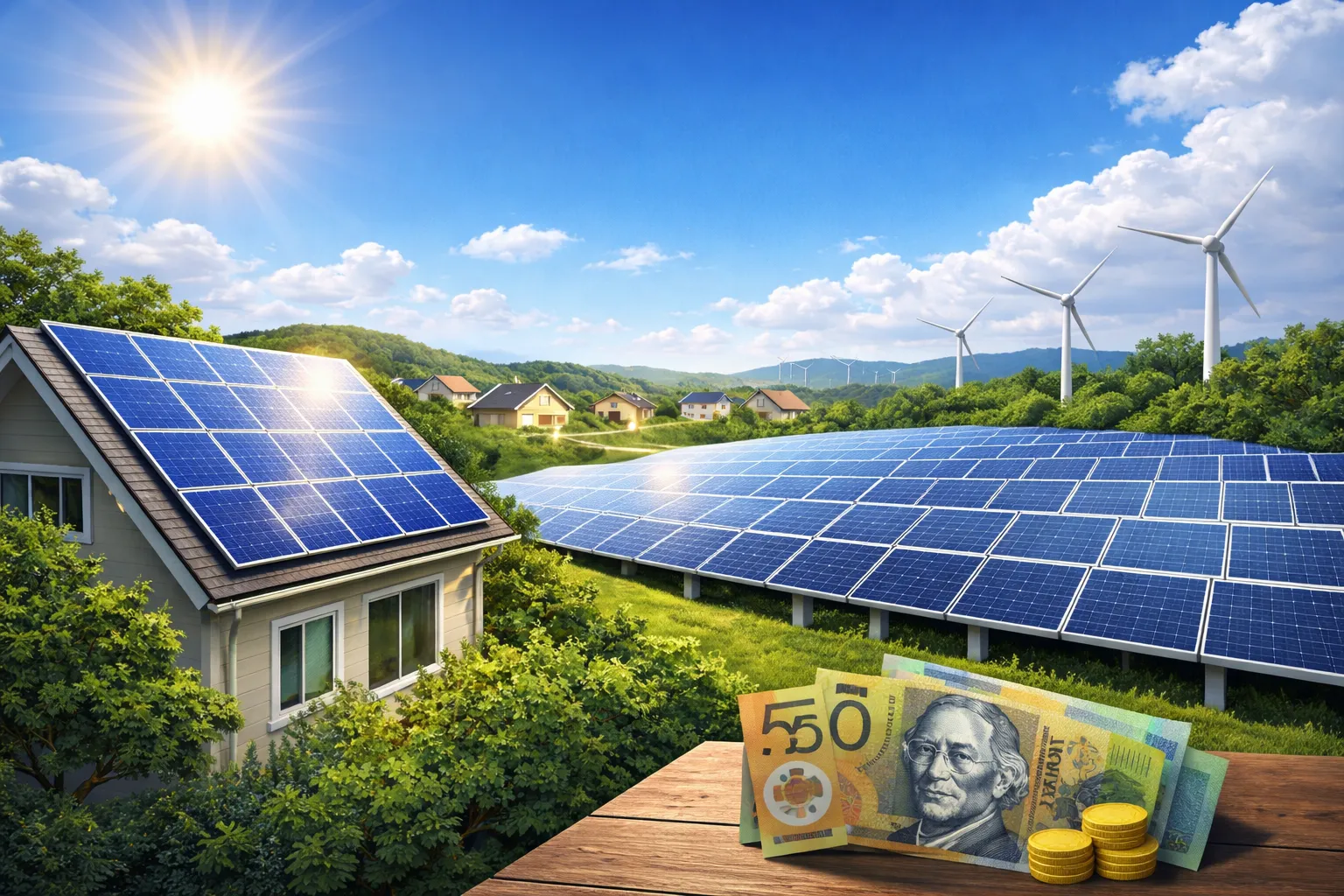
If you’ve been watching the news lately, you’ve probably seen the federal government doing a bit of a victory lap. The headline is simple and sounds like gold: three hours of "free" power every day in the middle of the day.
For anyone who spends time trying to decipher the "opaque" plans designed by retailers to keep you guessing, the immediate reaction is usually: "What’s the catch?" In the energy game, when something sounds too good to be true, it’s often because the real cost is buried in the bottom drawer of a contract you haven't seen yet.
Let’s take a look at what the Solar Sharer Offer (SSO) actually means for ordinary Australians before we get swept up in the hype.
What is the Solar Sharer Offer?
The basic idea is that Australia is currently "overflowing with sunshine." We have over four million rooftop solar systems across the country—including some massive residential setups reaching 18.5kW—that are pumping so much power into the grid at midday that wholesale power prices actually go negative.
Instead of letting that energy go to waste, the government wants you to "soak it up." Starting 1 July 2026, retailers in NSW, South-East Queensland, and South Australia will be required to offer at least three hours of free power (typically between 11:00 am and 2:00 pm) for those who opt-in.
The "Reasonable Use" Asterisk (The 24kWh Cap)
While the initial pitch sounded like an all-you-can-eat buffet, the details became much clearer once the policy hit the real world. The government has proposed a 24kWh daily cap on those three "free" hours.
To put that in perspective, 24kWh is roughly what a five-person household uses in an entire day. For many, it’s enough to run the dishwasher, washing machine, and dryer simultaneously. However, for heavy energy users—those trying to charge a large electric vehicle (EV) or fill a home battery on a cloudy winter day when their own solar isn't performing—hitting that 24kWh limit is easier than you might think.
The Smart Meter "Trojan Horse"
Here’s the part that wasn't in the big announcement: to access the Solar Sharer, you must have a smart meter.
Smart meters have their benefits, like ending the era of "estimated" bills, but they are also a point of contention for many. They allow retailers to track your usage in 30-minute blocks, enabling things like "dynamic pricing" and remote disconnections. If you have been holding out on the smart meter rollout, the promise of free lunch is the primary incentive being used to get that box installed on your wall.
Grid Strain and the "Voltage Cliff"
From a system-wide perspective, telling millions of people to turn everything on at exactly the same time is a massive challenge. Industry experts have warned of a "voltage cliff," where a synchronised surge in demand could cause local grid stress, potentially leading to appliance malfunctions or tripped circuit breakers.
There is also the controlled load issue. Many Australian homes heat their water on a separate, cheaper night-rate circuit. Experts suggest that the Solar Sharer could trigger an "exodus" where consumers hire professionals to move their hot water systems onto the primary circuit to chase that midday free power. If enough people do this, it could make managing the grid far more volatile and expensive for everyone in the long run.
Will You Actually Save Money?
Government modelling suggests that moving 10% of your usage to the free window could save a single person about $150 a year. A family that can shift 30%—including things like pool pumps and EV charging—could theoretically save up to $1,100 per year.
However, retailers still have to pay the "poles and wires" companies to get that power to your house, even if they aren't charging you for the electricity itself. To stay viable, retailers may look to recover those costs elsewhere by:
- Increasing daily supply charges.
- Raising rates during the evening peak when families are actually home and using lights and heating.
- Reducing feed-in tariffs, meaning you get less for the solar energy you send back to the grid.
The Consumer Playbook
The Solar Sharer isn't a miracle, but it is a tool. If you are looking at your energy options, keep these three points in mind:
- Don't write off your own solar: Free midday grid power doesn't make solar panels redundant. Generating your own power and using it is still the most effective way to protect yourself from retailers hiking their night rates or daily charges.
- Batteries gain a new edge: For those with smart battery systems, the SSO allows for "grid charging." You can potentially fill your battery for free at midday—even if it's raining—and use that energy to avoid the expensive 6:00 pm peak prices.
- Avoid the "Dismally Cheap": The energy market is getting more complex. "Cheerfully cheap" gear often leads to issues down the line. It is always worth seeking professional advice from reputable sources to ensure your home setup is ready for these new types of plans.
The End Bit At The Bottom:
Households don't pay bills with slogans; they pay them with real money. The Solar Sharer is a significant change, but it requires you to be active. If you’re willing to change when you use your power and keep a close eye on the "non-free" parts of your bill, it could be a win. Just don't expect Big Electricity™ to give anything away without a plan to earn it back somewhere else.