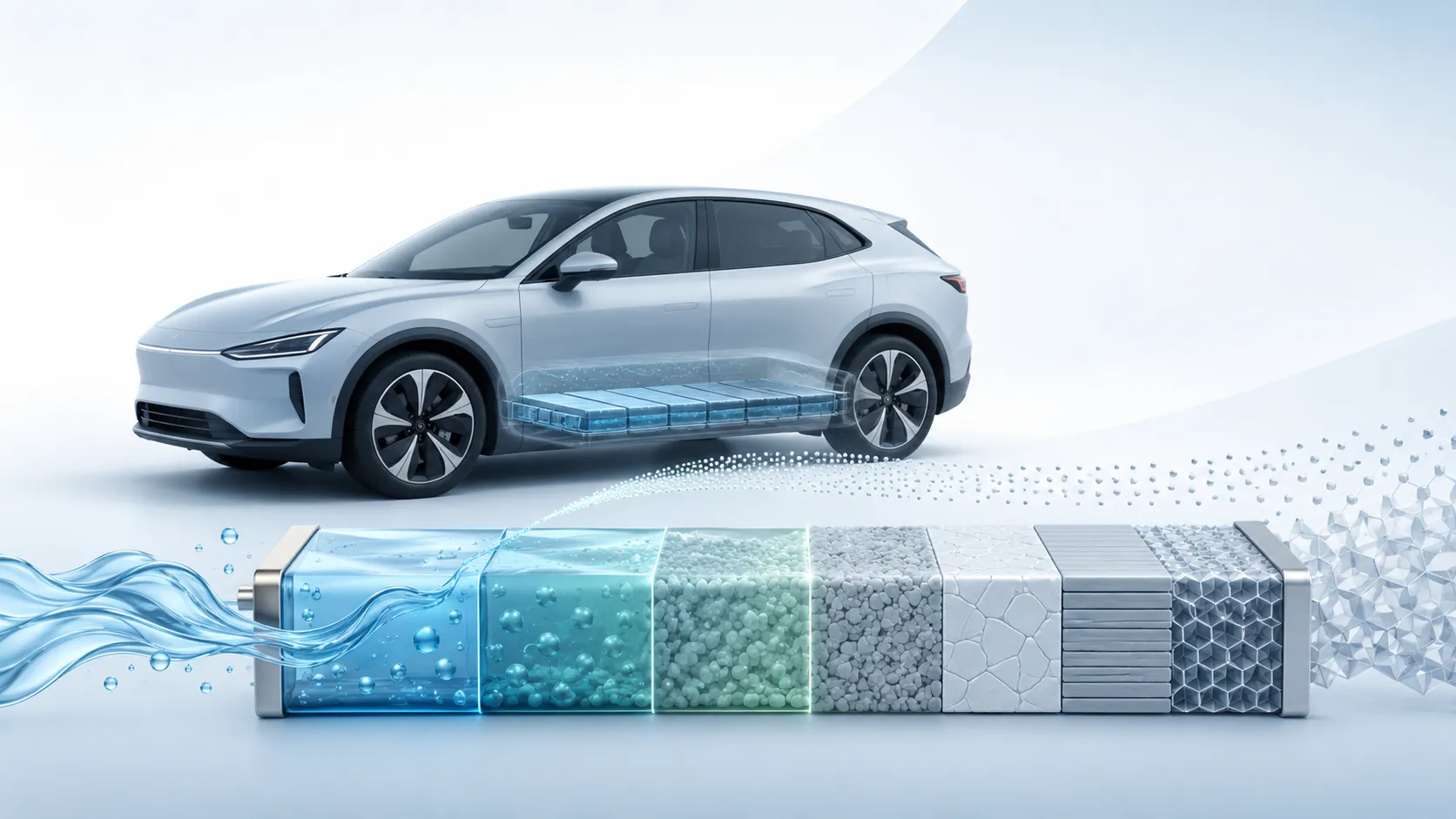
For years, electric vehicle buyers have been promised a coming breakthrough that would supposedly change everything. The pitch has been remarkably consistent: batteries that charge in minutes, travel extraordinary distances, weigh less, cost less and dramatically reduce fire risks.
Every few months another major manufacturer announces progress. One week it is Toyota claiming a leap forward, the next it is Samsung, BYD or a Silicon Valley battery startup unveiling a prototype or laboratory milestone. Yet if you walk into an Australian dealership today, the cars on sale are still relying on familiar lithium-ion battery technology.
So is the long-promised solid-state battery revolution finally close, or has it become another endlessly delayed clean-tech fantasy?
The reality in 2026 sits somewhere in the middle. Fully solid-state batteries are still emerging technology, but the industry has quietly moved into an important transitional phase. Instead of waiting for a perfect breakthrough, manufacturers are already introducing semi-solid battery systems that deliver some of the same advantages while avoiding many of the manufacturing headaches.
That shift is already beginning to reach Australian roads.
Why Car Makers Are Chasing Solid-State Batteries
Current EV batteries use liquid electrolytes to move lithium ions between electrodes during charging and discharging. The system works well, but it carries a couple of stubborn problems that engineers have spent years trying to solve.
The first issue is safety. Conventional liquid electrolytes are flammable, which is why thermal runaway events in EV batteries, while uncommon, can become extremely difficult fires to extinguish once they begin.
The second problem is the gradual formation of dendrites. These tiny needle-like structures can grow during charging cycles and eventually pierce internal separators, creating short circuits that damage the battery or trigger failure.
Solid-state batteries replace the liquid electrolyte with solid materials such as ceramics, polymers or sulphide compounds. That change potentially delivers two major benefits at once: greater stability and much higher energy density.
Because the solid material acts as a physical barrier against dendrites, engineers can safely use lithium metal anodes that store significantly more energy. In simple terms, that means lighter batteries, longer range and improved charging performance.
That combination is why governments, universities and manufacturers have poured billions into development.
The Chemistry Problem Nobody Has Fully Solved Yet
While the concept sounds straightforward, making these batteries work reliably inside a mass-produced vehicle has proved incredibly difficult.
Each proposed chemistry comes with major compromises.
- Ceramic systems conduct ions efficiently, but they can be brittle and vulnerable to cracking under real-world vibration and stress.
- Sulphide designs perform well electrically but are difficult and sensitive to manufacture safely.
- Polymer-based systems are easier to process but often struggle with ion movement at normal operating temperatures.
Researchers are still working through basic materials science challenges.
A recent study from Oak Ridge National Laboratory in the United States highlighted just how early some of this work remains. Scientists investigating polymer solid-state systems found that improving rigidity often slows ion transport, creating a difficult balancing act between safety and performance.
One promising approach involved introducing zwitterions — molecules carrying both positive and negative charges — into the polymer structure. The goal was to create internal pathways that allowed lithium ions to move more freely without depending entirely on polymer movement itself.
The results showed significant improvements in laboratory conditions, but that does not mean mass-market batteries are suddenly around the corner. It simply illustrates how much of the industry is still solving foundational engineering problems.
The Transition Has Already Started
While fully solid-state systems remain years away from widespread affordability, semi-solid batteries are rapidly becoming the practical middle ground.
These hybrid designs dramatically reduce the amount of liquid electrolyte while retaining enough compatibility with existing production methods to make commercial rollout viable.
That matters because the global battery industry cannot simply throw away trillions of dollars’ worth of manufacturing infrastructure overnight.
Instead, the market is evolving in stages.
Semi-solid systems deliver better thermal stability, improved energy density and reduced fire risk without requiring a complete reset of the production ecosystem.
Australian buyers are now beginning to see these systems enter mainstream vehicle offerings.
MG Pushes Semi-Solid Batteries Into the Local Market
MG has become one of the first manufacturers moving semi-solid battery chemistry into broader production.
Models including the MG4 Anxin Edition and MG4X SUV are expected to arrive in Australia with hybrid liquid-solid battery systems aimed at improving both charging speed and thermal stability.
The technology is particularly relevant for Australian conditions where prolonged heat exposure places additional strain on battery systems.
Entry-level variants are expected to offer around 435 kilometres of WLTP-rated driving range from a 54kWh battery pack while supporting rapid charging that can restore the battery from 10 to 80 per cent in roughly 20 minutes.
That is not science fiction anymore. It is showroom technology.
CATL’s Push Toward Ultra-High Energy Density
Battery giant CATL has also accelerated development of what it describes as condensed matter battery systems.
Using semi-solid chemistry combined with lightweight titanium alloy casings, the company claims energy densities reaching 350Wh/kg.
If those figures translate successfully into production vehicles, premium sedans could eventually achieve driving ranges approaching 1,500 kilometres while large SUVs clear 1,000 kilometres without excessive battery weight.
Whether those numbers become common in affordable vehicles anytime soon is another question entirely, but the direction of travel is obvious.
Where The Major Players Currently Stand
Across the industry, most manufacturers remain somewhere between pilot production and commercial testing.
MG and SAIC have already moved semi-solid systems into production-ready vehicles. CATL is pushing condensed matter systems into both aviation and premium automotive markets. QuantumScape continues developing ceramic separator technology with Volkswagen backing, while Solid Power and Prologium are building pilot-scale operations and gigafactories aimed at future expansion.
Most projections for fully mature, mass-market solid-state batteries still sit closer to the end of the decade.
What Australian EV Buyers Should Actually Do
For consumers, the important takeaway is surprisingly simple.
Waiting indefinitely for the “next big battery breakthrough” probably does not make much sense.
Battery technology is improving continuously, not through one giant overnight leap. Fully solid-state systems will likely appear first in premium vehicles before gradually filtering into mainstream models over many years.
Meanwhile, existing battery technologies are still advancing rapidly.
- Lithium iron phosphate batteries continue improving charging speed, durability and affordability.
- Sodium-ion alternatives are also beginning to emerge for lower-cost urban vehicles, avoiding some of the supply chain pressures tied to lithium and cobalt.
- The cars currently available are already highly capable.
Solid-state batteries may eventually push electric vehicles to another level entirely, but the transition has already started in quieter, more practical ways through semi-solid systems now entering the market.
The revolution, it turns out, is probably going to arrive gradually rather than all at once.